How to Get More from Your BlueCrest Without Spending a Fortune
BlueCrest inserter upgrade strategies are the fastest way for mail shops to unlock more throughput, flexibility, and reliability without swallowing a six-figure replacement cost. Most shops don’t need a new inserter—they need a smart upgrade. That single mindset shift can free capital, reduce risk, and extend the life of equipment you already trust.
OEMs want you thinking replacement. Smart operators think leverage.
Below are five reasons upgrading your BlueCrest beats replacing it—and how AME helps operators do it without drama, downtime, or blown budgets.
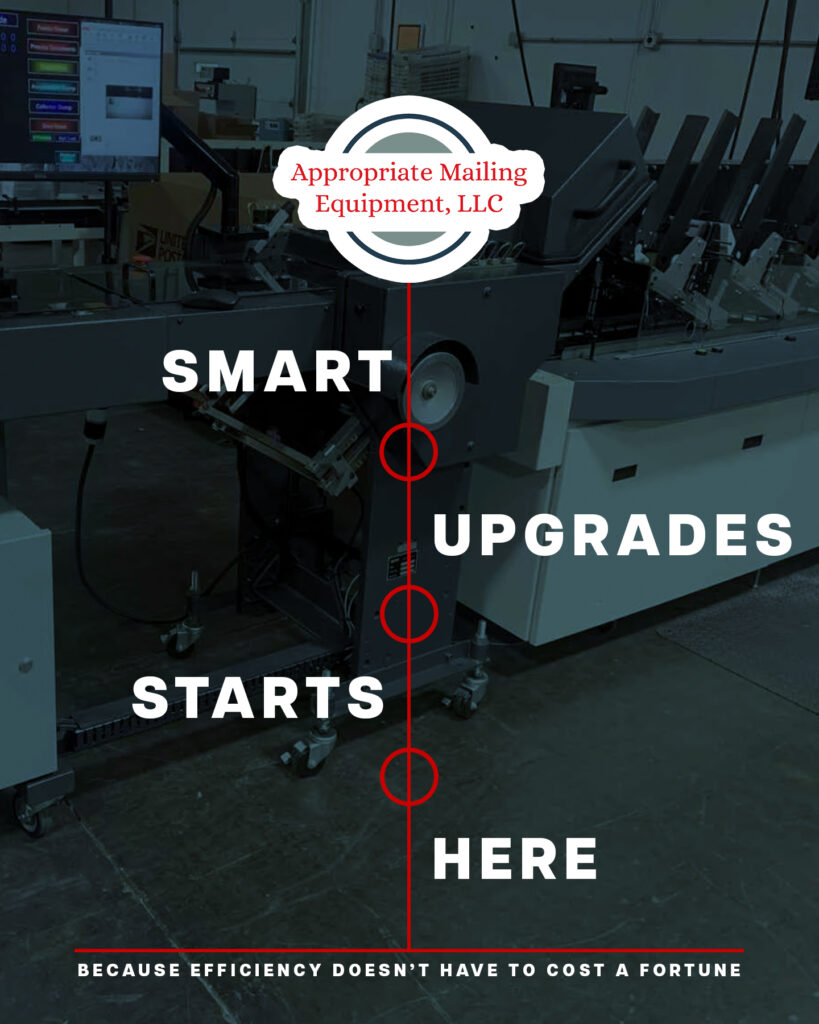
1. Your BlueCrest frame isn’t the problem—outdated components are
BlueCrest built durable platforms. Frames, transport paths, and core mechanics were engineered for long service life. What actually holds performance back are aging input channels, legacy controls, and feeder-folder limitations.
A targeted BlueCrest inserter upgrade replaces the weak links while preserving what still works.
AME retrofit solutions focus on:
Modern feeder-folder technology
Updated controls and sensors
Improved material handling and reliability
Compatibility with today’s workflows
You’re not paying to replace steel that still performs. You’re modernizing the parts that actually impact output and uptime.
That’s capital discipline.
2. Upgrade costs land where ROI lives—not where OEM margins hide
OEM upgrade paths are designed to maximize vendor revenue, not operator flexibility. They often come bundled with long lead times, rigid configurations, and service dependencies that lock shops into someone else’s roadmap.
AME flips that model.
A BlueCrest inserter upgrade through AME focuses on performance impact—not unnecessary replacement or inflated add-ons. The result is modern capability delivered through targeted improvements, not wholesale disruption.
What that means in real terms:
Faster path to measurable return
Less financial drag from overbuilt solutions
More capital available for labor, growth, or print expansion
This isn’t about cutting corners. It’s about directing investment where it actually produces results.
3. Modern input channels change everything downstream
Most BlueCrest performance bottlenecks originate upstream. Feeding and folding limitations ripple through the entire system—slowing cycles, increasing errors, and inflating labor.
Upgrading the input channel rewrites that story.
AME-supported solutions bring:
High-speed inline feeding and folding
Ultrasonic double detection
Broad paper compatibility, including heavier and glossy stocks
Camera-ready configurations for matching and integrity
When your input channel runs clean, the inserter runs faster, operators intervene less, and throughput stabilizes. That’s not theoretical. That’s operational reality.
A BlueCrest inserter upgrade doesn’t just modernize one module—it improves the entire production rhythm.
4. Replacement locks you deeper into OEM dependency
New inserter purchases don’t end with delivery. They come bundled with:
Proprietary parts pipelines
Long-term service contracts
Limited flexibility on upgrades or integrations
Slow response times when production is down
Upgrading breaks that cycle.
AME positions operators to own their equipment—not rent performance from an OEM. Retrofit and refurbishment strategies reduce dependence, expand service options, and give shops control over their roadmap.
That control matters when:
Budgets tighten
Volumes fluctuate
Clients demand faster turnaround
Labor gets harder to manage
A BlueCrest inserter upgrade keeps your operation adaptable instead of locked into someone else’s pricing model.
5. Upgrade paths keep doors open—replacement slams them shut
When you replace, you commit everything at once. Capital. Configuration. Vendor. Timeline.
Upgrades keep options open.
AME works with operators to stage improvements:
Start with the feeder-folder or input channel
Refresh controls where it counts
Integrate print enhancements when the business case makes sense
Extend system life while planning next moves
This phased approach reduces risk. You gain performance now without betting the business on a single massive purchase.
That flexibility is how smart operators stay profitable when the market shifts.
Where AME fits into a smart BlueCrest inserter upgrade
AME doesn’t sell shiny replacements for the sake of it. The focus stays on performance, ownership, and ROI.
What AME brings to the table:
BlueCrest-compatible retrofit and upgrade solutions
Refurbished and modernized feeder-folder technology
Independent parts and service support
Consultative assessments rooted in real production needs
For shops looking to extend value even further, AME also supports integrated print upgrades like the Norwix PC22 TIJ 4.0—a high-speed, low-maintenance inkjet solution that adds variable print capability without dragging in a seven-figure press investment.
The strategy stays the same: modern performance, smarter spend.
The real question isn’t “should we replace?”
It’s this:
Why replace an inserter that still has years of productive life when a BlueCrest inserter upgrade delivers what you actually need—speed, reliability, and control—at a fraction of the cost?
Most shops don’t outgrow their inserter. They outgrow outdated thinking.
Upgrade smarter. Run leaner. Keep capital working where it counts.